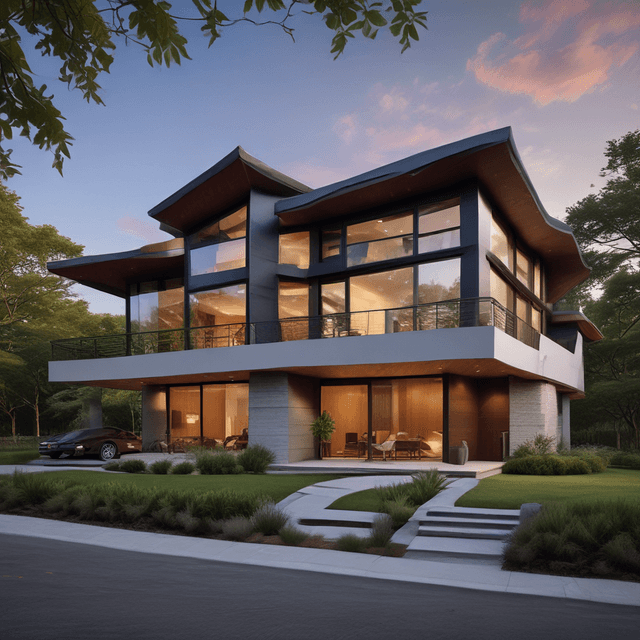
| Name | East Asian Modernism |
| Impact | Significant on the visual culture of East Asia, distinct from Western literary and musical modernism |
| Region | |
| Influences | Traditional East Asian aesthetics • Western influences |
| Time period | Late 19th to early 20th centuries |
| Characteristics | Simplicity • Abstraction • Natural motifs |
East Asian modernism refers to the diverse set of artistic movements and styles that developed across the region, particularly in the Korean Empire and Empire of Japan, from the late 19th century through the mid-20th century. While sharing certain philosophical and aesthetic influences, East Asian modernism was characterized by its decentralized, nationally distinct expressions rather than a unified pan-Asian movement.
The modernist impulse in East Asian art and design emerged later than in the West, in the context of the region's encounters with European colonialism and the waning influence of the Qing and Ming imperial orders. The Meiji Restoration in Japan and the rise of the Korean Empire in the late 19th century set the stage for the development of new national cultural identities and artistic visions.
Influenced by exposure to Western artistic forms as well as the philosophical and formal tenets of traditional East Asian aesthetics, early modernist movements in Korea and Japan sought to forge a distinct modernist idiom drawing on both Eastern and Western inspirations. This resulted in the emergence of a range of innovative architectural styles, decorative arts, and visual art forms in the late 1800s and early 1900s.
Some of the major strains of East Asian modernism included:
Korean Imperial Modernism: A style of architecture and design that combined traditional Korean palace aesthetics with Western elements, exemplified in buildings like the Changdeokgung Palace and Deoksugung Palace.
Japanese Art Deco: A fusion of Japanese artistic traditions with the sleek, geometric aesthetic of Art Deco, seen in buildings like the Morishita Tower and the work of designers like Sugiura Hisui.
Mingei Movement: A Japanese folk art-inspired movement that championed traditional craftsmanship and natural materials, practiced by artists like Yanagi Sōetsu and Hamada Shōji.
Shanghai Modern: An urban visual style blending Chinese elements with Western influences that flourished in the cosmopolitan treaty port cities of China, exemplified in the work of painters like Liu Haisu and Xu Beihong.
Buddhist Modernism: Architecture and art inspired by East Asian Buddhist aesthetics and practices, as seen in the works of Tange Kenzō and Arai Endō.
While these movements had distinct national characters, they shared a common emphasis on simplicity, abstraction, natural motifs, and the integration of traditional East Asian design principles with new materials and techniques.
Some of the most celebrated practitioners of East Asian modernism include:
East Asian modernism drew inspiration from a wide range of philosophical and cultural sources, including:
These diverse philosophical strands resulted in an East Asian modernism that, while related to Western modernist trends, maintained a distinct character rooted in regional cultural traditions.
While less renowned globally than its Western counterparts, East Asian modernism had a profound and lasting impact on the visual culture of the region. Its influence can be seen in the distinctive architecture, industrial design, and fine arts that proliferated across East Asia in the 20th century.
Many of the pioneering architects, designers, and artists of the modernist era went on to train new generations, ensuring the continued evolution and adaptation of these innovative styles and techniques. East Asian modernism also shaped urban planning, product design, and other aspects of the built environment, leaving an indelible mark on the visual landscape of major cities.
Today, the legacy of East Asian modernism lives on in the work of contemporary artists, designers, and architects across the region, who continue to draw inspiration from its unique amalgamation of tradition and modernity, Eastern and Western aesthetics.
